
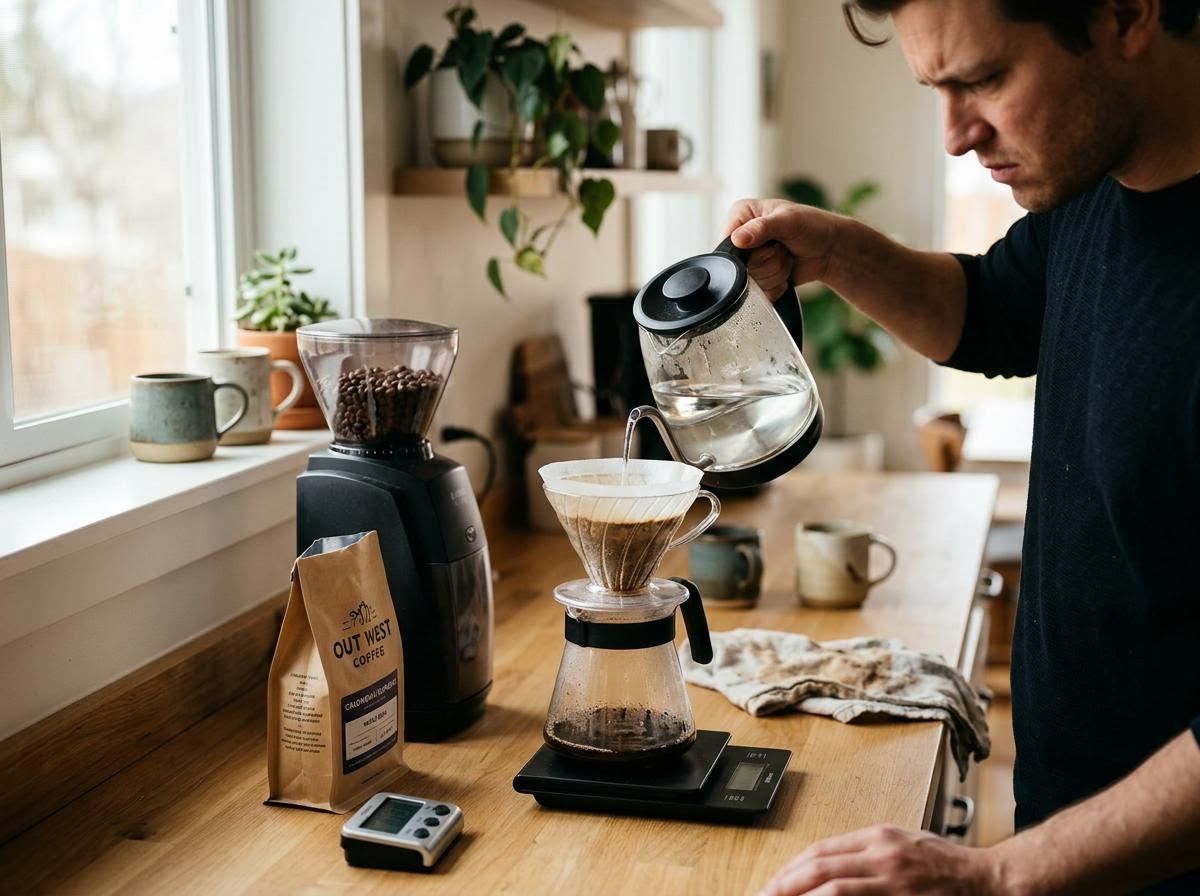
That morning cup of coffee should be a moment of pure enjoyment, a rich and aromatic start to the day. Yet, for many, that cherished ritual can sometimes be marred by an unwelcome visitor: bitterness. At Out West Coffee, we understand the pursuit of the perfect brew is a journey, and encountering a bitter taste can be frustrating. Often, the culprit isn't necessarily the quality of your coffee, but rather subtle missteps in the brewing process. Let's delve into some common errors that might be turning your cup from delightful to disagreeable.
The Grind Size Gamble
One of the most frequent reasons for bitter coffee stems from an incorrect grind size. When your coffee beans are ground too finely for your brewing method, water has too much surface area to interact with. This leads to over-extraction, where undesirable bitter compounds are pulled from the coffee grounds. Imagine trying to brew espresso with a coarse French press grind, or vice versa; the results would be far from ideal. Each brewing method, from pour-over to drip to espresso, requires a specific grind consistency to achieve balanced extraction.
Water Temperature and Quality Woes
The temperature of your water plays a critical role in how flavors are extracted from your coffee beans. Water that is too hot (above 205°F or 96°C) can scald the coffee, leading to an over-extraction of bitter elements, much like burning food. Conversely, water that isn't hot enough (below 195°F or 90°C) can result in under-extraction, producing a sour taste. Beyond temperature, the quality of your water matters. Hard water or water with high chlorine content can impart off-flavors, including bitterness, directly into your cup, masking the true profile of your carefully selected coffee.
The Extraction Time Trap
Brew time is a delicate balance, and letting your coffee steep for too long is a surefire way to introduce bitterness. Just as an overly fine grind can lead to over-extraction, prolonged contact between water and coffee grounds will do the same. For drip coffee, brewing for more than 5 minutes can push you into bitter territory. Similarly, pushing the shot time too long on an espresso machine will extract unwanted notes. Achieving the ideal brew time allows you to capture the inherent sweetness and complexity of the coffee, whether you prefer a bold dark roast coffee or a more delicate medium roast coffee.
Stale coffee beans and Improper Storage
Even with perfect brewing technique, old or poorly stored coffee beans can lead to a bitter, lifeless cup. Coffee is a perishable item, and once roasted, it begins to degas and lose its volatile aromatics. Stale coffee often tastes flat, cardboard-like, and yes, bitter, as the desirable flavors have oxidized away. Exposure to air, light, moisture, and heat are coffee's enemies. Always store your coffee beans in an airtight container in a cool, dark place. The fresher the coffee, especially if it's small batch coffee, the better the potential for a clean, vibrant taste.
Understanding these common brewing mistakes is the first step toward transforming your daily coffee experience from frustrating to fantastic. By paying attention to grind size, water temperature and quality, brew time, and the freshness of your coffee beans, you can unlock the true, rich flavors that your coffee has to offer. At Out West Coffee, we believe every cup should be a testament to quality, and through mindful brewing, you can achieve that perfect, bitterness-free moment. To continue your journey towards the ideal cup, explore our resources on how proper storage for hand packed coffee can preserve its peak flavor profile.